
God Makes the First Move
On grace, striving, and the God who always gets there first

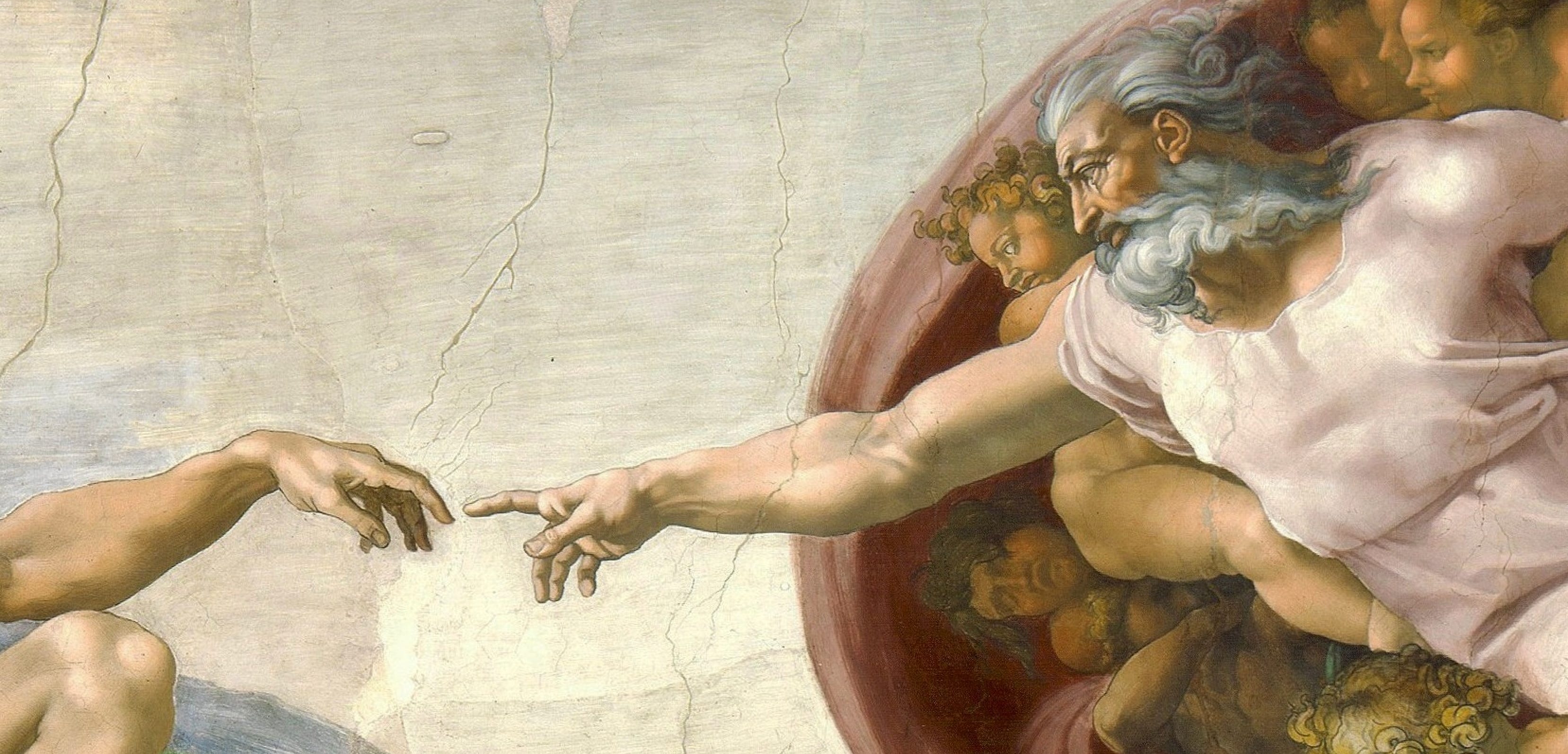
How can I grow in my faith?
I first remember asking that question as a teenager. I’d come to faith as a child, but something shifted in my teens and I became genuinely hungry. I wanted to know God, to grow, to get closer. And like any teenager who wants something, I went at it the way you go after anything you want. By doing all the things.
More prayer. More Bible reading. More showing up. More striving.
At one point, five of us from our youth group started meeting together several mornings a week before school, to pray and keep each other accountable. It was intense. And I think God met us in that frenzy of striving. He’s gracious like that.
But there have been other periods in my life that looked nothing like that. Times when I gave up, when I surrendered because I simply couldn’t. When the striving ran dry. And he was there too.
That’s the realisation that has slowly settled: God was already there. In both seasons.
Most of us assume we’re the ones who have to close the gap between us and God. But read almost any story of encounter in the Bible and you find the direction running the other way. God gets there first. Always has.
The Pattern Runs Through Everything
It starts before anyone exists in the first verses of Scripture. God speaks into nothing. There is no one to appeal to him, no raw material that earned his attention. The first act in all of Scripture is divine initiative into a void. Speaking life into being.
Then comes the first failure, and the first recorded thing God does after the fall is walk into the garden and call out: “Where are you?” Not waiting for confession. Not holding his ground. He comes looking.
Abram, Moses, Jacob, the founding figures of the story, share the same pattern.
There is no record of Abram seeking God before the call comes. God simply speaks to him in Ur, a city of idol worship, and the entire story of redemption begins with a word no one asked for.
Moses is tending sheep on an ordinary day when a fire that doesn’t consume interrupts his routine.
Jacob is sleeping rough in a field, fleeing his brother, nowhere near a spiritual frame of mind, and God appears. He wakes and says: “Surely the LORD is in this place, and I did not know it.” He was there before Jacob was aware.
Jeremiah is told: “Before I formed you in the womb I knew you; before you were born I set you apart.” The call precedes the person entirely.
Samuel doesn’t yet know the Lord. The text says so plainly. And God calls his name anyway, three times, before Samuel knows who’s speaking.
Gideon is hiding in a winepress when the angel appears and says: “The LORD is with you, mighty warrior.” It is a name that doesn’t match the winepress but will match the person Gideon is about to become.
The pattern holds even for those who have no claim on God’s attention. Hagar is not an Israelite. She has no covenant, no religious standing. When she flees into the wilderness, God finds her there. She names him El Roi: the God who sees me. She wasn’t looking. He was.
Elijah is under a broom tree, burnt out, asking to die. He doesn’t seek God. God sends food, rest, then the still small voice: a pastoral first move toward someone who has completely retreated.
In Ezekiel’s vision, the valley is full of dry bones. They cannot seek. They cannot respond. They are dead. God speaks. Breath comes. This is the argument at its logical extreme: life initiated before any response is possible.
Isaiah 65:1 says it plainly: “I revealed myself to those who did not ask for me; I was found by those who did not seek me.” God is not describing an exception. He is describing himself.
Hosea pictures God speaking to an unfaithful Israel: “I will allure her; I will lead her into the wilderness and speak tenderly to her.”
Even Psalm 139 doesn’t open with “I sought you.” It opens with: “You have searched me and known me.” The knowing runs in the other direction first.
When Jesus arrives, the pattern doesn’t change. It intensifies. Firstly to him - before he has preached a word or healed a single person, the Father speaks over him at the Jordan: “You are my Son, whom I love; with you I am well pleased.” Delight as the ground, not the reward.
Jesus then finds Simon and Andrew at their nets, not looking for a rabbi. He finds James and John, then Matthew at the tax booth. In every case, Jesus sees first.
He describes his own mission in the same terms: “I have other sheep that are not of this sheep pen. I must bring them also” (John 10:16). The shepherd goes after sheep who don’t yet know they belong.
He initiates a conversation with a Samaritan woman who has every reason to expect to be ignored, and offers her living water she didn’t know to ask for.
He looks up into a tree at Zacchaeus, who climbed up out of curiosity and not faith, and invites himself to dinner. Jesus himself names what is happening at the end of that encounter: “The Son of Man came to seek and to save the lost” (Luke 19:10). Came to seek. That is his own summary of why he is here.
He sees the man born blind, who has not called out to him, and heals him without being asked.
In Luke 15, Jesus tells three consecutive parables, each making the same point. The shepherd leaves the 99 to find one lost sheep. The woman searches the whole house for one lost coin. A sheep cannot find its way home. A coin cannot seek. Then comes the father and the prodigal son: the boy is still a long way off, still rehearsing his speech, when the father sees him and runs. The welcome doesn’t begin when the son arrives but in the father’s eyes while the son is still in the distance.
Jesus repeats the same story three times in a row because he wants the point to land: the initiative is never with the lost thing. It is always with the one who goes looking.
The New Testament writers keep returning to this, as though they still can’t quite take it in. “While we were still sinners, Christ died for us” (Romans 5:8), not once we had turned, not once we had improved, but while we were pointed in the wrong direction.
“Even when we were dead in transgressions, he made us alive” (Ephesians 2:4-5). Dead people cannot initiate, which is the argument at its absolute limit.
Paul, writing to the Galatians, begins to say “now that you know God” and then catches himself: “or rather, are known by God.” He notices the order slipping and refuses to leave it inverted.
Jesus himself says it without ambiguity: “You did not choose me, but I chose you.” (John 15:16)
And then there is Paul’s own story: not merely someone who was failing to seek God, but someone actively going the opposite direction, hunting down Christians, when God stops him mid-stride on the road to Damascus. “Saul, Saul, why do you persecute me?” Grace interrupting opposition.
And John’s first letter draws the whole thread together: “Not that we loved God, but that he loved us.” Then: “We love because he first loved us.” Our love, for God and for each other, is not the origin. It is the response.
As John Stott put it: “Before we decided to look for God, God had already been looking for us. The Bible isn’t about people trying to discover God, but about God reaching out to find us.”
From the first word of Genesis to the last pages of Revelation, where Jesus stands at the door of a church and knocks, the pattern does not waver. God speaks first. God comes first. God runs first. God calls first. God interrupts, allures, feeds, pursues, heals, chooses, and knocks.
Theological Grounding
The deepest thing the gospel offers is not forgiveness, not healing, not even new life (though it is all of those).
It is this: you are declared beloved before you have become anything.
Identity is not something you build or earn or prove. It is given before the ministry, before the faithfulness, before the track record. The spiritual life that follows is not the earning of that status. It is the growing into what is already true.
Jesus lived this first, so we could see what it looked like. The Father’s words at the Jordan arrive before he has preached a word, healed a person, or gathered a disciple: “You are my Son, whom I love; with you I am well pleased.” Delight as the ground, not the reward.
And immediately the wilderness tests it. Every temptation begins with the same phrase: “If you are the Son of God...” The enemy’s strategy is to get Jesus to prove the Father’s love, to earn it differently, to make achievement the basis of identity rather than identity the basis of everything. Jesus refuses, at every turn, to reverse the order. His security rests not on what he does but on what was spoken over him before any of it began.
That is the template, not just for Jesus but for everyone who follows him. Brennan Manning described what it felt like to live from it:
“My deepest awareness of myself is that I am deeply loved by Jesus Christ and I have done nothing to earn it or deserve it.”
Theologians have called this prevenient grace: the grace that comes before, that does not wait for our response but precedes and enables it. Wesley spoke of it as the grace that goes before all human response, making response possible at all. We do not work our way toward God and find him there. We find that we were already being drawn. Jesus says it explicitly: “No one can come to me unless the Father who sent me draws them” (John 6:44). The drawing precedes the coming. Even the desire to seek is itself initiated by God.
The implication goes further than it first appears. It is not just that God acts before we respond. It is that even the desire to respond, the restlessness, the searching, the sense that there must be something more, is itself the work of grace. The very ache is evidence of the love that caused it. We do not first feel the longing and then God responds. The longing is God’s prior move.
C.S. Lewis described his own conversion in terms that make this vivid. He wrote of feeling “the steady, unrelenting approach of Him of whom I so earnestly desired not to meet,” and of being, in the end, “the most dejected and reluctant convert in all England.” The initiative was entirely from the other side.
The theologian Daniel Bourguet puts it plainly:
“It is not, in fact, we who seek God. If we have now become disciples, it is not the result of our own seeking, our own quest for God, but because of his initiative.”
What this Changes in Practice
If God always moves first, then the spiritual disciplines, prayer, Scripture, silence, community, are not techniques for earning access. They are more like roots.
Psalm 1 pictures the person who is flourishing as a tree planted by streams of water, bearing fruit in season, leaves that don’t wither. The image is not of someone who has produced water from nowhere. The river was already there, already flowing. What the tree did was plant itself alongside it, put its roots in, and draw from what was running.
That’s a different picture of the spiritual life than the one most of us carry. Not climbing toward something distant. Not manufacturing a presence that isn’t there. More like finding where the river runs and staying close to it. The practices, the rhythms of prayer and Scripture and community: these are the roots. They don’t create the water. They draw us into what was already flowing long before we arrived.
This changes the emotional texture considerably. Disciplines pursued as achievement carry anxiety: am I doing enough? am I doing it right? But disciplines pursued as response carry something different: attentiveness, receptivity, a kind of hopeful waiting. Not passive. But not driven either.
If God is already present, then prayer is not reaching across a distance toward a God who may or may not be there. It is returning to a presence that was there before we arrived. The difference is subtle but significant. Reaching feels like the outcome is uncertain: maybe he’ll be there, maybe not, depending on how hard I try. Returning assumes I belong in a place I have temporarily left.
Brother Lawrence, a 17th-century monk who spent most of his life working in a monastery kitchen, called this “the practice of the presence of God,” not a technique for manufacturing awareness of God but the quiet act of recognising what is already true. “I keep myself in his presence,” he said, “not by reasoning or by hard thinking but by simple attention and a general loving awareness.” Simple attention. Not climbing. Noticing.
When the recognition comes, after the slide, it always feels like that father in the parable. You realise he was watching the road the whole time. You were rehearsing what you were going to say, calculating whether you’d done enough to warrant a welcome. And then you see him running.
That’s the thing you keep having to relearn. Not because the truth changes, but because we do. The good news is that it’s always the same truth waiting when you find your way back. Already there. Already running.
As Augustine prayed: “Lord, stir us up and call us back.”
A question to sit with:
Where in your story can you now see God was moving before you knew it?
Where in your life are you still trying to close a gap you think exists between you and God? What would it look like to stop reaching and start returning?
Something to try this week:
Once a day, instead of beginning prayer with a request or a confession, try beginning with a simple act of recognition: You are already here. Not as a technique. Not as a warm-up. Just as the truth. Sit with it for a moment before you say anything else. That’s the whole thing.
Such a fantastic revelation... God initiating the relationship. It's so counter intuitive to societal norms where we have to prove ourself in some way...work hard, study hard, demonstrate you're worthy, kick goals, be successful, stand out and maybe you'll fit in.
But God flips that on its head...You're already chosen, seen, loved. As you are... clothed in human fragility.
The same human fraility they sought to both shame for and strip Jesus of. But in stripping away the outer, they are left with who He truly is... Son of God, Name above all names, King of kings.
Flourish or parakh is my word this year and like those scriptures that remind us that we flourish beside the river and when we stay connected to the vine. It's hard not to feel joy at the flourishing we do simply because He initiated an invitation to join Him before we even realise we need to.
We see this pattern of firsts continue in the Feast of Weeks. For 40days He ministered to people after He rose from the grave, and ascended just a few days before Shavout - The First Feast of the First Harvest. So what does He do... He initiates again. This time He initiates the release of the Holy Spirit, so that (oh how I love so that clauses), we may continue to flourish once He ascends back to heaven.. Only this time, we flourish because He is inside us, not just beside us,like the river. Always First. Always there. Always ready to help us go deeper.
Thank for providing such a wonderful reminder that we serve a God who doesn't wait for us, but goes before us each and every time.